Publish at Scribd or explore others:

Buzzing MSIT news.
Friday, May 15, 2009


Thursday, May 14, 2009
MSIT Poster and Leafhead 2009
MSIT Poster:
MSIT Poster
MSIT Folder:
Msit pomp letter
Application Form, print and fill it for offline applications:
MSIT admissions form
MSIT Poster
Publish at Scribd or explore others:
MSIT Folder:
Msit pomp letter
Publish at Scribd or explore others:
Application Form, print and fill it for offline applications:
MSIT admissions form
Publish at Scribd or explore others:
Wednesday, May 6, 2009
Surviving the IT Job Market: How Soft Skills Give You an Edge
http://www.cio.com/article/print/490192
Surviving the IT Job Market: How Soft Skills Give You an Edge
– Dave Willmer, Computerworld
April 21, 2009
Competition for IT jobs has intensified, so companies that are hiring expect to find candidates who can exceed the technical requirements of a position. While soft skills have long been touted by IT employers, today's harsh economic realities have made those abilities more valuable than ever. IT professionals who know which soft skills are currently the most important and why—nd who are willing to work to improve those abilities—can find that they have a distinct advantage over similarly qualified peers.
Skills such as public speaking, negotiation and persuasion are among the most valuable in the current economic environment. What do these skills have in common? They're all based on the ability to communicate effectively. As budget restrictions create tension for managers and staffers alike, workplace relationships can easily become strained, leading to morale and productivity problems. Effective communication can help prevent or alleviate these situations.
Under such conditions, difficult projects are likely to fail without buy-in from all team members. That's why IT professionals who are skilled at building consensus have become especially valuable. Those who have both listening skills and the ability to help others see the big picture can help keep a department or project team focused on a common goal.
In addition, now that companies are more likely to scrutinize every expense, the ability to justify support for a project has also become more important. Professionals who can clearly communicate the value of a certain project to executives and other stakeholders are better positioned to thrive.
Beyond the Job Description
Don't overlook leadership as a key soft skill just because you aren't occupying or seeking a management-level position. Stepping up to assume extra responsibility—such as taking the lead on a challenging project—is another ability that current economic conditions have made valuable. Hiring managers no longer have the luxury of bringing on board employees who can't go above and beyond their usual duties as needed.
So, how do you go about improving your soft skills? One option is to look for classes that can help you develop these abilities. For example, if you hope to improve your public speaking skills, consider Toastmasters or a similar organization designed to help people overcome discomfort in presenting their ideas to groups. A writing course from a local college or online university can improve your writing skills. Keeping in touch with members of your network and attending industry events can also keep your interpersonal skills sharp.
One of the most powerful ways to develop your soft skills is to teach. In almost any form, teaching puts your diplomacy, persuasion and communication skills to the test. Look to local continuing education programs, community colleges and mentor organizations for opportunities to share your knowledge of the IT profession—and build your interpersonal abilities at the same time.
Show, Don't Just Tell
While your résumé and cover letter should reflect your efforts to grow beyond your technical proficiency, keep in mind that an interviewer's first impressions of your soft skills might carry the most weight. Try practicing your interviewing skills with a friend or trusted colleague whose interpersonal skills you admire, asking for constructive criticism. He or she may point out mannerisms or habits (such as interrupting the speaker) that you might not be aware of.
If all these suggestions are outside your comfort zone, don't be discouraged. After all, if soft skills could be comfortably acquired by all IT professionals, they wouldn't be at such a premium. Ultimately, all soft skills are partly a matter of attitude. By demonstrating your willingness to improve in areas that aren't your greatest strengths, you take a step toward becoming the kind of well-rounded IT professional today's companies need.
Dave Willmer is executive director of Robert Half Technology, a leading provider of IT professionals on a project and full-time basis. Robert Half Technology has more than 100 locations worldwide and offers online job search services at www.rht.com.
Surviving the IT Job Market: How Soft Skills Give You an Edge
– Dave Willmer, Computerworld
April 21, 2009
Competition for IT jobs has intensified, so companies that are hiring expect to find candidates who can exceed the technical requirements of a position. While soft skills have long been touted by IT employers, today's harsh economic realities have made those abilities more valuable than ever. IT professionals who know which soft skills are currently the most important and why—nd who are willing to work to improve those abilities—can find that they have a distinct advantage over similarly qualified peers.
Skills such as public speaking, negotiation and persuasion are among the most valuable in the current economic environment. What do these skills have in common? They're all based on the ability to communicate effectively. As budget restrictions create tension for managers and staffers alike, workplace relationships can easily become strained, leading to morale and productivity problems. Effective communication can help prevent or alleviate these situations.
Under such conditions, difficult projects are likely to fail without buy-in from all team members. That's why IT professionals who are skilled at building consensus have become especially valuable. Those who have both listening skills and the ability to help others see the big picture can help keep a department or project team focused on a common goal.
In addition, now that companies are more likely to scrutinize every expense, the ability to justify support for a project has also become more important. Professionals who can clearly communicate the value of a certain project to executives and other stakeholders are better positioned to thrive.
Beyond the Job Description
Don't overlook leadership as a key soft skill just because you aren't occupying or seeking a management-level position. Stepping up to assume extra responsibility—such as taking the lead on a challenging project—is another ability that current economic conditions have made valuable. Hiring managers no longer have the luxury of bringing on board employees who can't go above and beyond their usual duties as needed.
So, how do you go about improving your soft skills? One option is to look for classes that can help you develop these abilities. For example, if you hope to improve your public speaking skills, consider Toastmasters or a similar organization designed to help people overcome discomfort in presenting their ideas to groups. A writing course from a local college or online university can improve your writing skills. Keeping in touch with members of your network and attending industry events can also keep your interpersonal skills sharp.
One of the most powerful ways to develop your soft skills is to teach. In almost any form, teaching puts your diplomacy, persuasion and communication skills to the test. Look to local continuing education programs, community colleges and mentor organizations for opportunities to share your knowledge of the IT profession—and build your interpersonal abilities at the same time.
Show, Don't Just Tell
While your résumé and cover letter should reflect your efforts to grow beyond your technical proficiency, keep in mind that an interviewer's first impressions of your soft skills might carry the most weight. Try practicing your interviewing skills with a friend or trusted colleague whose interpersonal skills you admire, asking for constructive criticism. He or she may point out mannerisms or habits (such as interrupting the speaker) that you might not be aware of.
If all these suggestions are outside your comfort zone, don't be discouraged. After all, if soft skills could be comfortably acquired by all IT professionals, they wouldn't be at such a premium. Ultimately, all soft skills are partly a matter of attitude. By demonstrating your willingness to improve in areas that aren't your greatest strengths, you take a step toward becoming the kind of well-rounded IT professional today's companies need.
Dave Willmer is executive director of Robert Half Technology, a leading provider of IT professionals on a project and full-time basis. Robert Half Technology has more than 100 locations worldwide and offers online job search services at www.rht.com.
Tuesday, May 5, 2009
MSIT beckons students
The word IT no more fascinates students, rather it is being dreaded. But IT just cannot be done away with, though one has to live to the ups and downs of the industry and its demands. So those with the best IT skills will always be in demand rather than those who just possess an IT degree.
The Master of Science in Information Technology (MSIT) offered by the Consortium of Institutions of Higher Learning (CHIL) formed by the AP Universities in collaboration with the Carnegie Mellon University (CMU), USA is one programme that promises to send out IT professionals who can deal with any situation than just giving an IT degree.
It has been designed to provide industry specialists who have hands-on experience, understand business needs, work patterns and deadline pressures of the corporate environment.
“The key differentiating factor is its unique pedagogy ‘learning by doing’. Evolved through eight years of relentless pursuit of excellence the programme has an extensive support of CMU in terms of course content and faculty training,” says M. Sreenivas Rao, Dean, MSIT.
A few other domain specialisations like bio-informatics are in the pipeline. MSIT Spree has been an initiative to network and celebrate togetherness of belonging to MIST fraternity while MSIT Journeys, a speaker series, has successfully got students in touch with professionals from industry giving them the required inputs and exposure.
The programme also provides teaching assistantships to the second year students.
Despite slow down 80 per cent students are placed this year while all were absorbed in the earlier batches.
The course is offered at the International Institute of Information Technology (IIIT) (100 seats) and JNTU Hyderabad (150 seats) and is open to B.Tech or B.E graduates or those with a P.G. degree in Computer Science, Mathematics or Statistics.
Last date
Admission is based on entrance test to be conducted online from May 24. The last date for submitting application forms is May 18 and one can apply online also at ‘ www.msitprogram.net.’
Candidates can directly walk-in to the testing centre at the Eduquity Career Technologies Pvt Ltd at My Home Sarovar Plaza, Secretariat Road in Hyderabad from Thursday to Sunday before May 23. Entrance test is waived off for candidates with GRE scores above 1100/3.5 and it should have been taken after July 2006.Details can be had on www.msitprogram.net.
Article in Hindu: http://www.hinduonnet.com/edu/2009/05/04/stories/2009050450480400.htm
It is offered by CHIL in collaboration with CMU, writes R. RAVIKANTH REDDY
Friday, April 17, 2009
GSC Cyber Security Challenge 2009 - Now accepting applications
Cyber security has become the new frontier in the security and defence world.
Therefore, we seek the world's most creative innovators and start-ups to help responding to these mounting challenges in cyber security. We recognize that many disruptive innovations are not ready for mass commercialization and we encourage researchers and infant companies to apply for this year'sCyber Security Challenge. The judging for this award will focus mainly on the disruptive potential of the technology, focusing less on the idea's maturity.
BAE Systems are sponsoring the Cyber Security Challenge through their Investment in Innovation team:"Cyber Security is a key area for us to further invest in both because of the wide range of issues currently faced and the breadth of work being done in the space. We seek to uncover the creative capabilities of innovators in universities and SMEs that apply to information assurance and cyber security needs."
Targeted Technologies: Examples of our areas of interest include data protection, user authentication, penetration testing, network protection, spam-prevention, anti-malware, identification of data theft, detection of dormant threats on corporate servers, tackling of identity theft on the internet and defences for virtualised computing resources.The winners of this year's Cyber Security Challenge will receive:
- £5,000 GBP cash award for the 1st place winner, sponsored by BAE Systems
- £4,000 GBP cash award to be split among the two runner-ups, sponsored by BAE Systems
- Mentorship by Nick Kingsbury (Venture Capitalist, former partner at 3i)
Who can Apply: Individuals & Companies
Deadline for Submissions: May 15, 2009
How to Apply: Enter by using our online submission system
The Global Security Challenge LLP (GSC) is a central hub for security innovators, start-ups and investors. It is a valuable launching pad for security innovation and each year over $500,000 USD is awarded in its world leading competitions to start-ups, entrepreneurs and researchers within the security technology field. The top contenders from previous competitions have subsequently raised over $52 million in new capital.
Thursday, April 16, 2009
Solutions for Rural Communities and The Geo Tourism Challenge

Here are announcements of two opportunities to enter global online competitions and to be showcased to a network of like-minded community members, funders, CSOs, thought leaders, universities, governments, and enthusiasts!
Ashoka is a global non-profit network and support system for social entrepreneurs—people who devise innovative solutions to the social problems that plague society. To further this goal, Ashoka's Changemakers (www.changemakers.net) provides an online, interactive forum that encourages collaboration and discussion, along with theme-based competitions, to draw out the most effective ideas.
ENTER ONLINE GLOBAL COMPETITION: "The Geotourism Challenge: Power of Place."
Entry Deadline: May 20, 2009.
Prizes: Three top winners get $5,000 each.
Competition focus: In partnership with National Geographic Society, Ashoka's Changemakers is looking for examples of sustainable management of tourism, or geotourism, as it is widely known. NatGeo defines geotourism as ''tourism that sustains or enhances the geographical character of a place--its environment, culture, aesthetics, heritage, and the well-being of its residents.'' We're looking at people and organizations -- including the government, and corporations -- that are are initiating responsible innovations that use tourism to help sustain, enhance, or preserve local culture, build heritage, and natural habitats. For more details on the competition, please visit: http://www.changemakers.net/
ENTER ONLINE GLOBAL COMPETITION, "Cultivating Innovation: Solutions for Rural Communities"
Entry Deadline: May 13, 2009.
Prizes: a) Three top winners get $5,000 each; b) Early Bird Prize: If you enter by April 13, 2009, you could win a cell phone and digital camera (equal value of USD $1000); c) Nominator Prize: If you nominate people/organizations who could enter the competition, you stand to win a special prize!
Competition focus: In partnership with the Bill & Melinda Gates Foundation, Ashoka's Changemakers is looking for innovative solutions that span the entire agricultural value chain – from seeds to sales. Three-quarters of the world’s poorest people—the 1 billion who live on $1 a day or less—rely on agriculture to feed themselves and their families, yet many cannot grow enough to sell or even eat. If you've come up with strategies, tools and opportunites for small farmers to boost their productivity, increase their incomes, and build better lives for themselves and their families, enter now! For more details on the competition, please visit http://www.changemakers.com/
For more information or media queries, please contact Ms. Kalpana Kaul, Asia Director & Managing Editor, Ashoka's Changemakers. Tel. No. 033-2417-2587; 6535-8647 (Kolkata, India). Email:changemakers@vsnl.com; kkaul@ashoka.org
Monday, April 6, 2009
Sunday, March 22, 2009
The importance of stupidity in scientific research
Martin A. Schwartz Department of Microbiology, UVA Health System, University of Virginia, Charlottesville, VA 22908, USA
e-mail: maschwartz@virginia.edu
Accepted 9 April 2008 Journal of Cell Science 121, 1771 Published by The Company of Biologists 2008 5B I recently saw an old friend for the first time in many years. We had been Ph.D. students at the same time, both studying science, although in different areas. She later dropped out of graduate school, went to Harvard Law School and is now a senior lawyer for a major environmental organization. At some point, the conversation turned to why she had left graduate school. To my utter astonishment, she said it was because it made her feel stupid. After a couple of years of feeling stupid every day, she was ready to do something else. I had thought of her as one of the brightest people I knew and her subsequent career supports that view. What she said bothered me. I kept thinking about it; sometime the next day, it hit me. Science makes me feel stupid too. It's just that I've gotten used to it. So used to it, in fact, that I actively seek out new opportunities to feel stupid. I wouldn't know what to do without that feeling. I even think it's supposed to be this way. Let me explain. For almost all of us, one of the reasons that we liked science in high school and college is that we were good at it. That can't be the only reason - fascination with understanding the physical world and an emotional need to discover new things has to enter into it too. But high-school and college science means taking courses, and doing well in courses means getting the right answers on tests. If you know those answers, you do well and get to feel smart. A Ph.D., in which you have to do a research project, is a whole different thing. For me, it was a daunting task. How could I possibly frame the questions that would lead to significant discoveries; design and interpret an experiment so that the conclusions were absolutely convincing; foresee difficulties and see ways around them, or, failing that, solve them when they occurred? My Ph.D. project was somewhat interdisciplinary and, for a while, whenever I ran into a problem, I pestered the faculty in my department who were experts in the various disciplines that I needed. I remember the day when Henry Taube (who won the Nobel Prize two years later) told me he didn't know how to solve the problem I was having in his area. I was a third-year graduate student and I figured that Taube knew about 1000 times more than I did (conservative estimate). If he didn't have the answer, nobody did. That's when it hit
me: nobody did. That's why it was a research problem. And being my research problem, it was up to me to solve. Once I faced that fact, I solved the problem in a couple of days. (It wasn't really very hard; I just had to try a few things.) The crucial lesson was that the scope of things I didn't know wasn't merely vast; it was, for all practical purposes, infinite. That realization, instead of being discouraging, was liberating. If our ignorance is infinite, the only possible course of action is to muddle through as best we can.
I'd like to suggest that our Ph.D. programs often do students a disservice in two ways. First, I don't think students are made to understand how hard it is to do research. And how very, very hard it is to do important research. It's a lot harder than taking even very demanding courses. What makes it difficult is that research is immersion in the unknown. We just don't know what we're doing. We can't be sure whether we're asking the right question or doing the right experiment until we get the answer or the result. Admittedly, science is made harder by competition for grants and space in top journals. But apart from all of that, doing significant research is intrinsically hard and changing departmental, institutional or national policies will not succeed in lessening its intrinsic difficulty.
Second, we don't do a good enough job of teaching our students how to be productively stupid - that is, if we don't feel stupid it means we're not really trying. I'm not talking about 'relative stupidity', in which the other students in the class actually read the material, think about it and ace the exam, whereas you don't. I'm also not talking about bright people who might be working in areas that don't match their talents. Science involves confronting our 'absolute stupidity'. That kind of stupidity is an existential fact, inherent in our efforts to push our way into the unknown. Preliminary and thesis exams have the right idea when the faculty committee pushes until the student starts getting the answers wrong or gives up and says, 'I don't know'. The point of the exam isn't to see if the student gets all the answers right. If they do, it's the faculty who failed the exam. The point is to identify the student's weaknesses, partly to see where they need to invest some effort and partly to see whether the student's knowledge fails at a sufficiently high level that they are ready to take on a research project. Productive stupidity means being ignorant by choice. Focusing on important questions puts us in the awkward position of being ignorant. One of the beautiful things about science is that it allows us to bumble along, getting it wrong time after time, and feel perfectly fine as long as we learn something each time. No doubt, this can be difficult for students who are accustomed to getting the answers right.
No doubt, reasonable levels of confidence and emotional resilience help, but I think scientific education might do more to ease what is a very big transition: from learning what other people once discovered to making your own discoveries. The more comfortable we become with being stupid, the deeper we will wade into the unknown and the more likely we are to make big discoveries.
Tuesday, February 3, 2009
Instinctive Computing
Instinctive computing is a computational simulation of biological and cognitive instincts. It is a meta-program of life, just like universal gravity in nature. It profoundly influences how we look, feel, think, and act. If we want a computer to be genuinely intelligent and to interact naturally with us, we must give computers the ability to recognize, understand, even to have primitive instincts. The original paper proposes a ‘bottom-up’ approach that is focused on human basic instincts: forage, vigilance, reproduction, intuition and learning. They are the machine codes in human operating systems, where high-level programs, such as social functions can override the low-level instinct. However, instinctive computing has been always a default operation. Instinctive computing is the foundation of Ambient Intelligence as well as Empathic Computing. It is an essential part of Human Computing.
What is the fundamental difference between a machine and a living creature? Instinct!
Instincts are the internal impulses, such as hunger and sexual urges, which lead humans to
fulfill these needs. Freud stated that these biologically based energies are the fundamental driving forces of our life. They act everyday to protect us from danger and keep us fit and healthy. However, we are often barely aware of them.
Perhaps the most striking things for us are hidden in our cells. Recent biological studies
suggest that mammalian cells indeed possess more intelligence than we can imagine.
For example, the cell movement is not random. It is capable of immensely complex
migration patterns that are responses to unforeseeable encounters. Cells can 'see', for
example, they can map the directions of near-infrared light sources in their environment
and direct their movements toward them. No such 'vision' is possible without a very
sophisticated signal processing system.
Instinctive computing is a computational simulation of biological and cognitive
instincts. It actually started fifty years ago. Norbert Weiner studied computational
models of Gestalt, self-reproduction and learning. According to him, these functions are a
part of the holistic communication between humans, animals and machine, which he
called it ‘Cybernetics’. In parallel, John von Neumann proposed the cellular automata
model to simulate self-reproduction . The model constitutes finite state cells interactingwith one another in a neighborhood within a two-dimensional space.
The conceptual machine is far ahead of its time. Due to the limitations in hardware, people had forgottenthe idea for several decades until the 1970’s: Conway rediscovered it in his article “Game of Life” . In the model, an organism has its instinctual states, birth, movement, eating and death. Interesting patterns emerge from cell interactions such as blooming, oscillation or extinction. Wolfram further proves that many simple cellular interactions can produce very complex patterns, including chaos. He argues that interactive algorithms are more important than the mathematical equations . The spatial and temporal interaction among entities is the key to understanding their complexity.
Today, computational cellular automata have become a powerful tool to reveal the natural human algorithms, from microscopic cellular morphology to mass panic movement in subway stations. Instinct is a meta-program of life, just like universal gravity in nature. It profoundly influences how we look, feel, think, and act. If we want a computer to be genuinely intelligent and to interact naturally with us, we must give computers the ability to
recognize, understand, even to have primitive instincts. In this paper, we will review the
recent work in this area, the architecture of an instinctive operating system, and potential
applications.
Fullpaper by Dr.Yang Cai here: http://www.cmu.edu/vis/media/pdf/Cai-Instinctive-Computing-Feb-26-V6.pdf
Saturday, January 10, 2009
MD5 considered harmful today, Creating a rogue CA certificate
main article here
We have identified a vulnerability in the Internet Public Key Infrastructure (PKI) used to issue digital certificates for secure websites. As a proof of concept we executed a practical attack scenario and successfully created a rogue Certification Authority (CA) certificate trusted by all common web browsers. This certificate allows us to impersonate any website on the Internet, including banking and e-commerce sites secured using the HTTPS protocol.
Our attack takes advantage of a weakness in the MD5 cryptographic hash function that allows the construction of different messages with the same MD5 hash. This is known as an MD5 "collision". Previous work on MD5 collisions between 2004 and 2007 showed that the use of this hash function in digital signatures can lead to theoretical attack scenarios. Our current work proves that at least one attack scenario can be exploited in practice, thus exposing the security infrastructure of the web to realistic threats.
As a result of this successfull attack, we are currently in possession of a rogue Certification Authority certificate. This certificate will be accepted as valid and trusted by all common browsers, because it appears to be signed by one of the root CAs that browsers trust by default. In turn, any website certificate signed by our rogue CA will be trusted as well. If an unsuspecting user is a victim of a man-in-the-middle attack using such a certificate,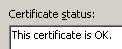 they will be assured that the connection is secure through all common security indicators:
 a "https://" url in the address bar, a closed padlock and messages such as "This certificate is OK" if they chose to inspect the certificate.
This successful proof of concept shows that the certificate validation performed by browsers can be subverted and malicious attackers might be able to monitor or tamper with data sent to secure websites. Banking and e-commerce sites are particularly at risk because of the high value of the information secured with HTTPS on those sites. With a rogue CA certificate, attackers would be able to execute practically undetectable phishing attacks against such sites.
The infrastructure of Certification Authorities is meant to prevent exactly this type of attack. Our work shows that known weaknesses in the MD5 hash function can be exploited in realistic attack, due to the fact that even after years of warnings about the lack of security of MD5, some root CAs are still using this broken hash function.
The vulnerability we expose is not in the SSL protocol or the web servers and browsers that implement it, but in the Public Key Infrastructure. This infrastructure has applications in other areas than the web, but we have not investigated all other possible attack scenarios. So other attack scenarios beyond the web are conceivable, such as in the areas of code signing, e-mail security, and in other areas that use certificates for enabling digital signatures or public key encryption.
The rest of this document will explain our work and its implications in a fair amount of detail. In the interest of protecting the Internet against malicious attacks using our technique, we have omitted the critical details of our sophisticated and highly optimized method for computing MD5 collisions. A scientific paper about our method is in preparation and will be released after a few months, so that the affected Certification Authorities have had some time to remedy this vulnerability.
Read full article here if interested
Saturday, July 12, 2008
Google Code Jam
Google Code Jam (any body interested?)
http://code.google.com/codejam/
http://code.google.com/codejam/
About Code Jam.
Do you enjoy solving tough problems and grappling with technical challenges? Then enter Google Code Jam!
Google Code Jam is a coding competition in which professional and student programmers are asked to solve complex algorithmic challenges in a limited amount of time. The contest is all-inclusive: Google Code Jam lets you program in the coding language and development environment of your choice.
Google Code Jam begins in July and continues in August, when you will compete in online rounds against contestants from around the world. The Top 500 participants will advance to onsite competitions at a local Google office to compete against those in their region (Asia Pacific; Europe, Middle East and Africa; and the Americas). The Top 100 will participate in the final round at the Google Headquarters in Mountain View, California on Friday, November 14.
Don't be left out! Make sure to register between June 17 and July 17, and show your coding creativity in Google Code Jam.
Thursday, June 19, 2008
Google Code Jam
Do you find yourself debugging in your sleep? Enjoy solving tough problems and grappling with technical challenges? Then enter Google Code Jam and compete for more than $80,000 in cash prizes!
Google Code Jam is an annual competition in which programmers like you are challenged to solve complex coding problems in a limited amount of time – using any programming language or tools you like.
We began offering Google Code Jam in 2003 – on a platform powered by TopCoder – in order to support competitive programming around the world. This year, for the first time, we're producing the contest on a homemade platform developed by Google's own developers.
Here's how it works: First, you'll need to register from Tuesday, June 17 through Thursday, July 17. Then, you'll compete against global contestants in the online rounds during July and August. The Top 500 will advance to compete in one of our Google offices around the world in September/October for regional competitions. Finally, the Top 100 will compete in the coding showdown on November 14, 2008, at Google Headquarters in Mountain View, California.
To learn more details and to register, please visit - code.google.com/codejam
We hope to see you at the Finals!
Sincerely,
Google's Code Jam Team
Subscribe to:
Posts (Atom)